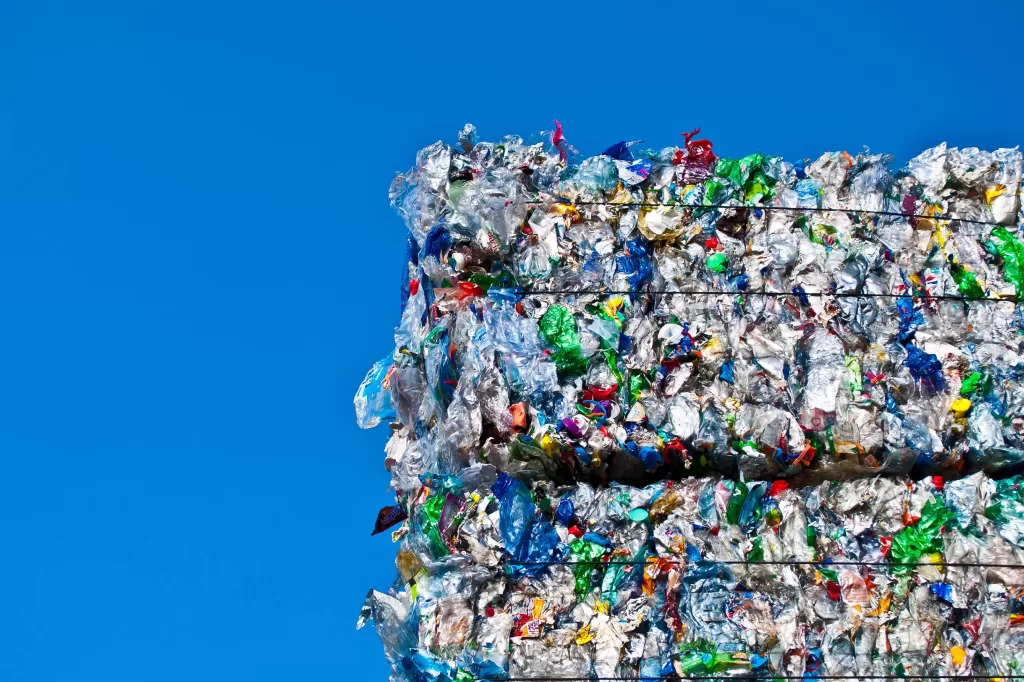
We need to do things differently to move towards a circular plastics economy. Dow shows how partnership and collaboration can help to drive and embed new technologies.
The plastics industry faces a pressing challenge in the quest for a sustainable future. How do you recycle successfully when traditional recycling has limitations?
Dow recognised that the linear model of single-use plastic is not sustainable and has been working to transform plastic into a valuable resource that can be used repeatedly. To help achieve this, the company forged a strategic partnership with Mura Technology, pooling expertise to scale up advanced recycling technologies.
Traditional mechanical recycling cannot accommodate certain plastic items, such as thin films used for food and pharmaceutical protection. However, Mura’s revolutionary Hydro-PRT® (Hydrothermal Plastic Recycling Technology) advanced recycling process can recycle a wide range of plastic, including post-consumer flexible and multi-layer materials.
Hydro-PRT uses supercritical water –water under elevated pressure and temperature, above its critical point – to convert these hard-to-recycle plastics into high-yields of circular petrochemical feedstocks. In addition, energy recovered in the process is used to drive product separation, while recovered process gas is used to generate supercritical steam, reducing the reliance on virgin fossil fuels.
“The continuation and growth of Dow and Mura’s collaboration is another example of how Dow is working strategically to expand and build momentum around securing circular feedstocks and supporting breakthrough advanced recycling technologies.”
Isam Shomaly – Dow Business Vice President for Feedstocks and Commodities
Once deployed at scale, Hydro-PRT has the capability to prevent millions of tons of plastic and carbon dioxide from entering the environment every year and create the ingredients for a sustainable, circular plastics economy with recycled feedstock.
Mura Wilton, Mura’s first Hydro-PRT facility, is set to begin operations in early 2026 and will place 20,000 tonnes of circular hydrocarbons onto the market annually. Dow will be an offtaker of the recycled hydrocarbons that Mura produces. The offtake will enable Dow to manufacture new, high-quality circular plastics which are currently in huge demand from global brands, who are looking to recycle plastic waste from their supply chains.
A peer-reviewed lifecycle analysis study by Warwick Manufacturing Group[1] (at the University of Warwick) reports an 80% reduction in carbon emissions versus incineration of plastic waste when the Hydro-PRT process is implemented. In addition, Hydro-PRT is both a cleaner equivalent to fossil, with a lower GWP when compared with fossil naphtha, and an impactful partner to mechanical recycling, with advanced and mechanical combined saving 42% carbon emissions when compared to incineration and mechanical recycling.