Closing the Loop on Styrenics
The plastics industry faces a pressing challenge: reduce waste and cut carbon emissions while maintaining high-performance materials for food packaging, healthcare, and automotive applications. Traditional mechanical recycling cannot fully address the complexity of styrenics, making scalable chemical recycling essential to meet Europe’s circular economy and regulatory goals.
Turning Waste Back into Value
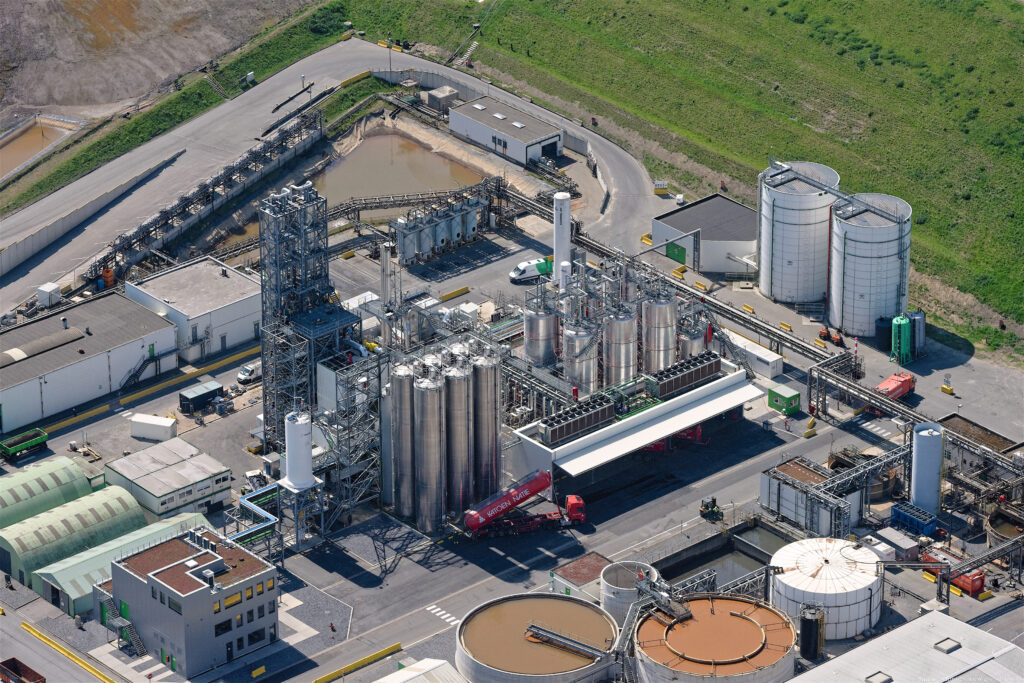
INEOS Styrolution and Indaver teamed up to prove the commercial feasibility of chemical recycling for styrene. Indaver’s advanced depolymerisation technology transforms post-consumer polystyrene waste into high-quality styrene monomer. This recycled monomer is then integrated into INEOS Styrolution’s European production chain to manufacture recycled styrenic products without compromising quality.
Key Features of the Project
- Advanced Depolymerisation: Indaver’s proprietary process converts polystyrene waste into pure styrene monomer
- Full Circularity: Recycled styrenics match the performance of virgin materials, enabling true closed-loop recycling
- Industrial Integration: Recycled monomer is used at market scale in INEOS Styrolution’s European facilities
- Certified Sustainability: ISCC PLUS mass balance certification ensures traceability and verified environmental benefits
First Commercial-Scale Production in Europe
This project represents the first commercial-scale production of recycled styrene monomer in Europe. Key achievements include:
- Demonstrated technical and commercial feasibility of large-scale circular styrenics production
- High-quality monomer suitable for food-contact and high-performance applications
- Established a model for full circularity in the styrenics sector
Facts and Figures
- 26,000 tonnes/year: Capacity of Indaver’s depolymerisation unit in Antwerp
- First commercial deliveries mark a critical step toward large-scale closed-loop recycling
- Recycled styrene monomer significantly reduces carbon footprint compared to virgin fossil-based monomer
Driving Circularity Across Europe
The collaboration provides a replicable blueprint for circular styrenics, supporting Europe’s transition to a sustainable plastics economy. It demonstrates that chemical recycling can reduce dependence on fossil resources while delivering high-performance materials. INEOS Styrolution plans to expand the use of chemically recycled styrene across its European operations, encouraging wider industry adoption.
“We are pleased that we can now offer styrenics from depolymerisation at market scale. This gives our customers more sustainable options to lower their environmental footprint without compromising product quality or performance.”
Rob Buntinx, President EMEA, INEOS Styrolution
“With Plastics2Chemicals (P2C), Indaver is pioneering the circular economy and advanced chemical recycling. By converting hard-to-recycle plastics into virgin-quality feedstock such as styrene, we are closing the loop and offering a sustainable alternative to fossil resources. Our technology, combined with strategic partnerships and continuous innovation, enables us to deliver high-purity materials for demanding applications like food packaging – proving that circularity and performance can go hand in hand.”
Erik Moerman, Sales and Development Director P2C, Indaver