
Partners: Neste, Borealis and Covestro
Turning End of Life Tires into New Value
Every year, large numbers of used tires reach the end of their service life. Traditionally, these materials have been downcycled, incinerated, or treated as low-value waste. At the same time, the automotive industry is under growing pressure to increase recycled content and meet stricter circularity requirements under the proposed EU End of Life Vehicles Regulation (ELVR).
The question facing the value chain was straightforward. Can discarded tires be transformed into high quality plastics suitable for demanding automotive applications?
A joint project between Neste, Borealis and Covestro set out to prove that they can — elevating materials into solutions that matter.
Building a Circular Value Chain
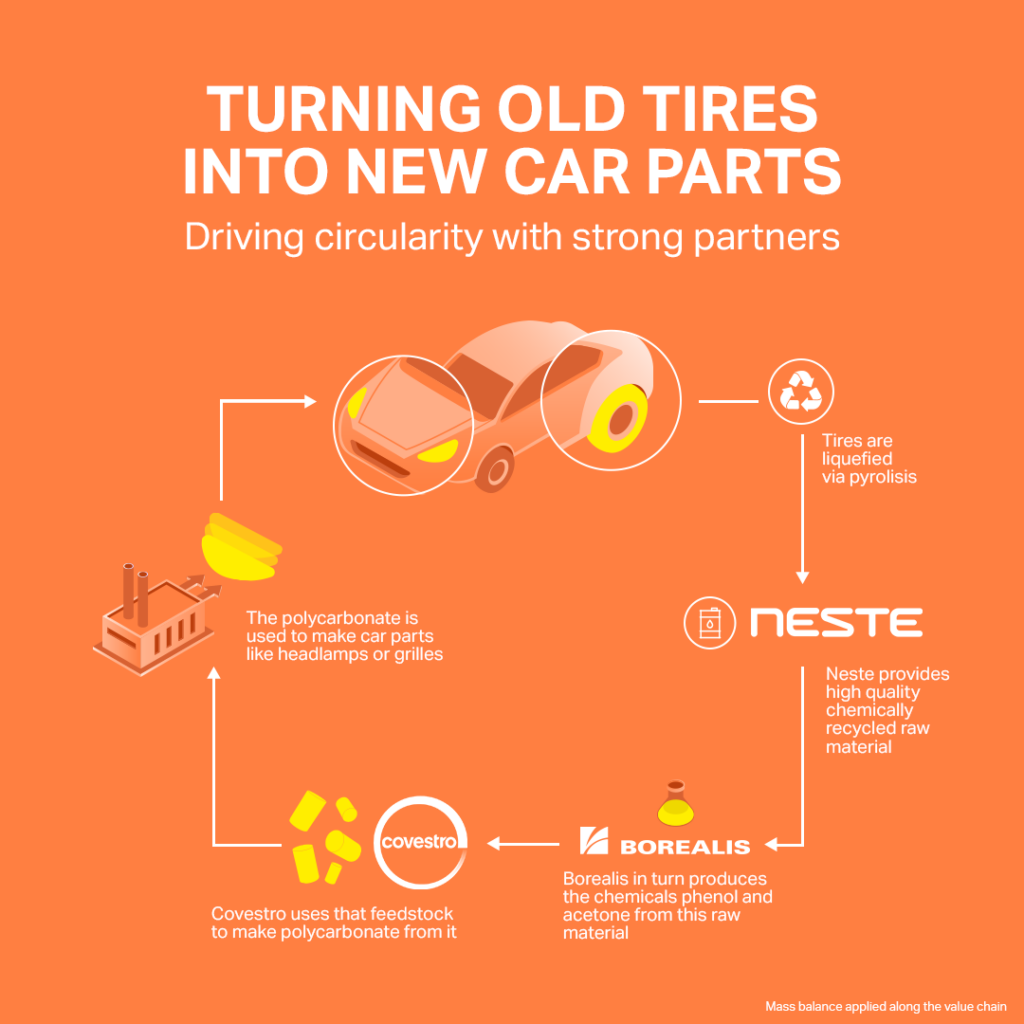
The partners created a chemical recycling pathway that converts used tires from vehicles into new plastics for the automotive sector.
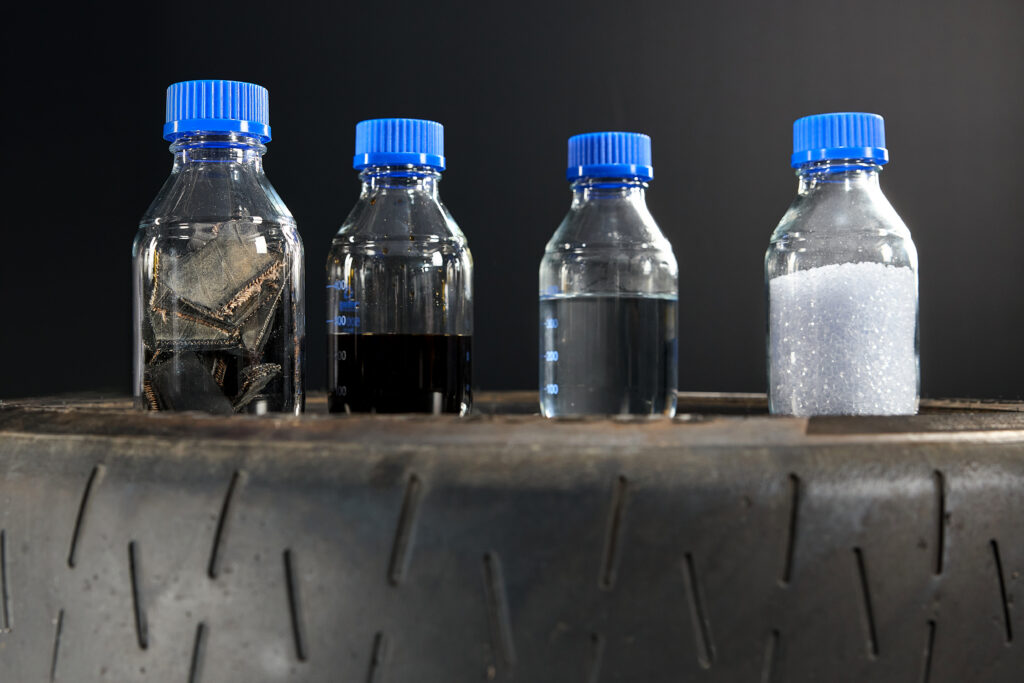
The process begins with the liquefaction of end-of-life tires through pyrolysis. Neste upgrades the resulting pyrolysis oil at its refinery in Porvoo, Finland, turning it into high quality raw material for chemicals and plastics production.
Borealis then converts this feedstock into phenol and acetone. These intermediates are supplied to Covestro, which uses them to produce polycarbonate through several processing steps. The result is high purity polycarbonate suitable for applications such as headlamp components and radiator grilles.
Each partner has successfully produced its first batches of intermediate and final products under the project framework. The recycled content is allocated using the ISCC PLUS certified mass balance method, providing transparency and traceability across the value chain.
© Covestro
From Pilot to Market Relevance
The initial focus is on polycarbonate, but the model goes further. Pyrolysis oil from used tires can also be processed into naphtha and further into key building blocks such as benzene and toluene. These are essential for producing polyurethane, which is widely used in car interiors including seats, dashboards, and door panels.
Industrial scale processes for these materials are already in place. By integrating recycled feedstocks into existing production systems, the partners are demonstrating how circular solutions can move beyond pilot scale.
The collaboration is also aligned with the soon to be published EU’s End of Life Vehicles Regulation (ELVR), which specifically recognizes mass balance and chemical recycling as a way to reach recycled quotas for plastic in new vehicles The partners see the project as a practical contribution to shaping how recycled content requirements could work in reality, with potential relevance beyond Europe.
Redefining Waste in the Automotive Sector
This initiative shows how cooperation across the plastics value chain can shift materials from a linear to a circular model. What was once considered waste becomes a resource for high performance applications.
“The pilot project is uncharted territory for everyone involved and marks the beginning of a new level of partnership within the value chain that extends beyond the usual marketing and sales relationships,” says Thomas Van De Velde, Senior Vice President Base Chemicals at Borealis.
“Until now, there have been very few recycling concepts that use end-of-life tires as a valuable raw material source for high quality chemical and plastic products on a large scale,” says Guido Naberfeld, Senior Vice President, Head of Sales and Market Development Mobility at Covestro.
“As an engineer, I understand the underlying processes of the project and how we can turn old tires into transparent headlights. But as a consumer, I still find it impressive that it really works,” says Maiju Helin, Director, Polymers & Chemicals at Neste. “It’s a prime example of how our view of waste is transforming the circular economy. By working together with all players in the value chain, we can transform plastic waste or old tires into high-quality products even in demanding applications.”
For the partners, the next step is scaling up tire recycling volumes and expanding the concept to additional polymers. By doing so, they aim to fully close the loop and set a model for circular plastics in the automotive industry.