Executive Summary: Circular Economy Act as Europe’s new competitiveness strategy and its implications for plastics

High-level stakeholder event organised by PubAffairs Bruxelles in partnership with Plastics Europe


The debate brought together policymakers, industry representatives and stakeholders to discuss the role of the forthcoming Circular Economy Act (CEA) in Europe’s industrial future. The discussion took place against a backdrop of growing concerns about European competitiveness, industrial resilience and strategic autonomy. Traditionally viewed through an environmental lens, participants broadly agreed that circularity must now be considered as a core component of Europe’s economic and industrial strategy.

In her opening remarks, Virginia Janssens, Managing Director of Plastics Europe, argued that Europe has reached a critical moment in its circular transition:

  • Europe must act with greater urgency, coordination and political commitment if it is to preserve industrial capacity while advancing its circular economy objectives.
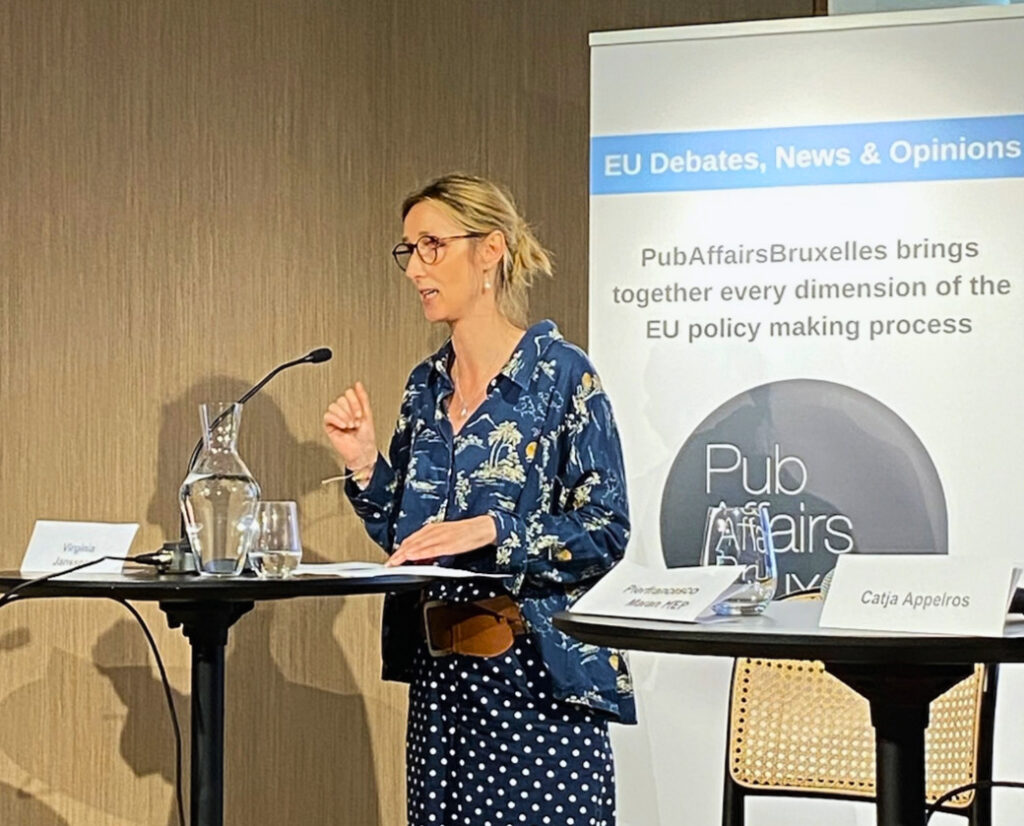
  • Europe’s transition towards circular plastics is losing momentum at a time when other regions are accelerating investments and market development.
  • The plastics industry is facing a significant competitiveness challenge due to high energy and carbon costs, increasing global overcapacity, rising imports and growing trade distortions.
  • European industry must simultaneously manage two imperatives: short-term industrial survival and long-term transformation towards circularity.
  • The Circular Economy Act should deliver targeted measures that accelerate circularity while supporting Europe’s industrial base.
  • Circularity requires collective action across the value chain, involving industry, policymakers, consumers and investors.
  • Europe must act with greater urgency, coordination and political commitment if it is to preserve industrial capacity while advancing its circular economy objectives.

The panel discussion positioned the forthcoming Circular Economy Act (CEA) as a strategic industrial policy instrument. Panellists broadly agreed that Europe’s circular transition must now be understood through the interconnected objectives of competitiveness, strategic autonomy, industrial resilience, and decarbonisation.

While the Green Deal established an ambitious regulatory framework, speakers argued that the next phase must focus on implementation, market creation, investment conditions, and enforcement if Europe is to translate policy ambition into industrial outcomes.

Below are the major themes of the debate.

Circular economy as an industrial strategy

The discussion reflected broad agreement that the Circular Economy Act represents a shift in European policymaking from environmental regulation towards industrial strategy. Speakers argued that circularity should support economic growth, employment, resource security and competitiveness alongside climate objectives. Participants viewed the Act as part of a broader evolution of EU policy, moving beyond the Green Deal towards a framework that better integrates industrial resilience with sustainability. Several noted that this shift has been accelerated by geopolitical developments, supply chain disruptions and growing concerns over European competitiveness.

Competitiveness and industrial policy

Competitiveness emerged as the central theme throughout the discussion. Speakers consistently argued that Europe risks weakening its industrial base if environmental policies are not accompanied by measures that maintain manufacturing competitiveness. Participants stressed that declining European plastics production has not reduced plastics consumption, but instead increased reliance on imported materials. Several contributors, therefore, argued that Europe’s objective should be to produce circular materials domestically rather than outsource production to regions operating under different environmental standards. There was broad agreement that industrial policy should strengthen entire value chains rather than individual sectors in isolation.

Strategic autonomy and secondary raw materials

Participants agreed that secondary raw materials should increasingly be regarded as strategic economic assets. Reducing dependence on imported virgin materials through improved collection, repair and recycling was presented as an important contribution to Europe’s strategic autonomy. Several speakers cited examples from metals and batteries to illustrate how secondary resources can become increasingly important industrial inputs. The discussion also recognised that strategic autonomy should not translate into protectionism. Rather, Europe should diversify supply chains while strengthening domestic capacity and maintaining mutually beneficial international partnerships.

Creating markets for recycled plastics

Perhaps the strongest area of consensus concerned market creation. Speakers repeatedly argued that increasing recycling alone is insufficient if demand for recycled materials remains weak. Mandatory recycled-content requirements, eco-design measures and clear demand signals were identified as essential mechanisms for creating commercially viable markets. Participants welcomed existing recycled-content targets for packaging and vehicles while suggesting that similar approaches should be extended to additional sectors. The discussion also highlighted that market creation should encompass other sustainable carbon sources, including bio-based feedstocks where appropriate.

Investment conditions and regulatory certainty

Speakers consistently linked successful circularity to investment confidence. Industry representatives argued that companies require predictable legislation, stable regulatory frameworks and long-term demand signals before committing investment to new production capacity or recycling infrastructure. Although regulatory simplification was broadly supported, participants cautioned against creating uncertainty by repeatedly reopening recently agreed legislation. Stable implementation was considered more valuable than continual legislative revision. Several contributors also argued that regulation alone cannot deliver industrial transformation without significantly greater investment from both public and private sources.

Energy, electrification and circularity

The energy perspective focused on the close relationship between recycling, electrification and decarbonisation. Participants argued that recycling energy-intensive materials such as plastics substantially reduces overall energy demand while lowering dependence on fossil fuels. Electrification of industry and transport was presented as another critical pillar of Europe’s competitiveness and decarbonisation strategy.

Single market, implementation and enforcement

Implementation emerged as one of the discussion’s strongest recurring concerns. Speakers argued that Europe already possesses extensive legislation but lacks sufficiently harmonised implementation across Member States. Administrative fragmentation, inconsistent enforcement and differing national approaches were all identified as barriers to investment and market development. Several participants advocated a more integrated Single Market with harmonised standards, stronger cooperation between Member States, faster recognition of new technologies, and simpler administrative procedures.

Trade, international partnerships and “Made in Europe”

Participants generally supported strengthening European production while recognising the importance of open international trade. Several speakers endorsed greater emphasis on “Made in Europe” and European recycled materials, particularly regarding quality assurance, environmental standards and industrial resilience. At the same time, contributors cautioned against isolationism. Europe was encouraged to diversify supply chains, maintain export competitiveness and deepen partnerships with emerging economies, particularly where these partnerships support sustainable industrial development.